

Accurate Books. Clear Decisions. Peace of Mind.

Richardson, TX 75081

Category: Bookkeeping Tips

  • Your Books Are Months Behind—Now What?

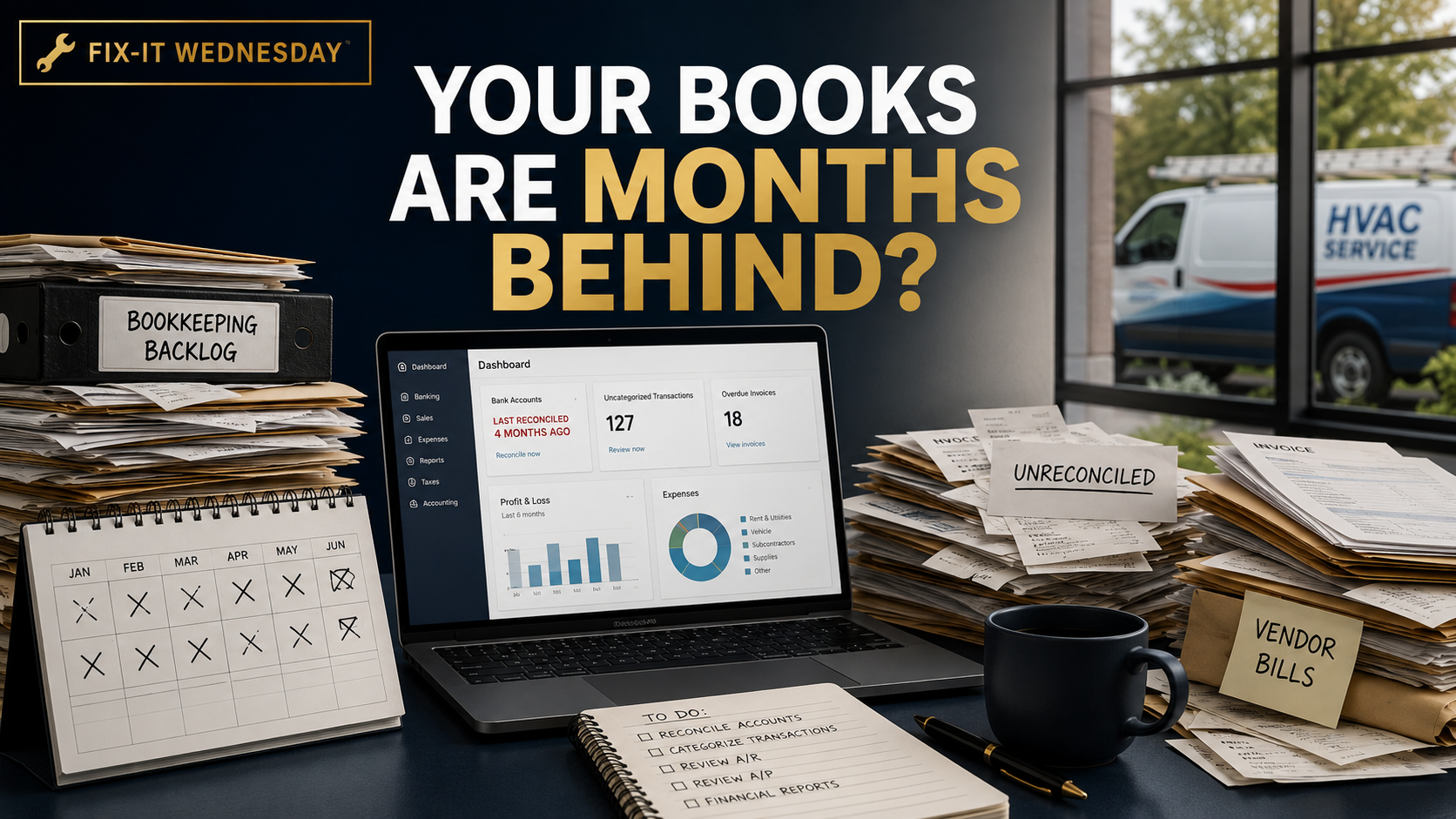
    Your Books Are Months Behind—Now What?

    Your Books Are Behind. Don’t Panic.

    It’s been a busy few months.

    Customers needed you. Jobs needed to get done. Your team needed you. Vendors needed to be paid. And somewhere along the way, your bookkeeping fell further and further behind.

    Maybe it’s been two months.

    Maybe six.

    Maybe you don’t even want to check.

    If that sounds familiar, you’re not alone.

    For many small business owners—especially owners of busy HVAC, plumbing, electrical, landscaping, and other service-based businesses—bookkeeping is something that gets pushed aside when there’s more immediate work demanding attention.

    The problem is that the longer your books stay behind, the harder it becomes to know what’s actually happening financially.

    You may be making sales without knowing your true profitability.

    You may have customers who haven’t paid their invoices.

    You may have vendor bills that haven’t been recorded.

    And you may be making important business decisions based on financial information that’s months old.

    The good news? Being behind doesn’t mean your books can’t be fixed.

    You don’t need to panic, and you don’t necessarily need to start entering transactions randomly just to get caught up.

    You need a systematic process.

    In this guide, we’ll walk through how to catch up bookkeeping, what to prioritize, when professional help makes sense, and how to keep your books from falling behind again.

    Table of Contents

    • First, Don’t Panic
    • What Happens When Your Books Fall Months Behind?
    • Step-by-Step: How to Catch Up Your Bookkeeping
    • What Catch-Up Bookkeeping Looks Like for an HVAC Business
    • Should You Catch Up Your Books Yourself or Hire a Bookkeeper?
    • How to Keep Your Books From Falling Behind Again
    • How Prime Ledger Can Help
    • Key Takeaways
    • Frequently Asked Questions
    • Conclusion

    First, Don’t Panic

    Being behind on your bookkeeping can feel overwhelming, especially when you don’t know how much work is waiting for you.

    But the first step is surprisingly simple:

    Stop making the problem bigger.

    If your books are three months behind, don’t let them become four months behind while you’re trying to figure out how to fix the first three.

    Start by establishing where you are today.

    Then work backward systematically.

    Being Behind Doesn’t Mean Your Business Is Failing

    A bookkeeping backlog doesn’t necessarily mean your business is poorly managed.

    In fact, it can happen because your business is growing.

    An HVAC owner may spend an entire week managing emergency calls.

    A plumbing company may have technicians working overtime.

    An electrical contractor may be juggling several large projects.

    When you’re busy serving customers, bookkeeping can easily fall to the bottom of the list.

    The important thing is to recognize the problem and address it.

    The Bigger Risk Is Continuing to Ignore It

    The real danger isn’t necessarily that your books are already behind.

    It’s continuing to operate without reliable financial information.

    The longer the backlog grows, the harder it becomes to answer basic questions:

    How profitable are we?

    How much cash do we really have available?

    Who still owes us money?

    What bills do we owe?

    Which expenses are increasing?

    Can we afford to hire another employee?

    When your books are months behind, those answers become much harder to trust.

    What Happens When Your Books Fall Months Behind?

    A bookkeeping backlog affects more than your accounting software.

    It can affect how you run your business.

    You Lose Financial Visibility

    If your books haven’t been updated in months, your Profit & Loss Statement may not reflect your current situation.

    You might be looking at financial information from several months ago while making decisions about today.


    Cash Flow Becomes Harder to Manage

    Your bank balance tells you how much cash is in your account.

    It doesn’t necessarily tell you what cash you need to reserve for upcoming bills, payroll, or other obligations.

    Without current records, cash flow planning becomes much more difficult.


    Outstanding Customer Payments Can Be Missed

    If accounts receivable isn’t current, you may not have a reliable list of customers who still owe your business money.

    That can result in delayed follow-up and slower cash collection.


    Vendor Bills Can Fall Through the Cracks

    The same problem can happen with accounts payable.

    If bills aren’t properly recorded and tracked, you may lose visibility into what your business owes and when payments are due.


    Tax Preparation Becomes More Difficult

    When financial records aren’t current, tax preparation can require additional cleanup before your tax professional can confidently use the information.

    Keeping your books current throughout the year can make that process much smoother.

    Step-by-Step: How to Catch Up Your Bookkeeping

    Now let’s get to the part you’ve been waiting for.

    How do you actually catch up?

    The key is to work systematically instead of trying to fix everything at once.


    Step 1: Stop the Backlog From Growing

    Before you start cleaning up old transactions, make sure new transactions aren’t continuing to pile up.

    Establish a cutoff date.

    For example:

    “Today is August 10. From this point forward, I’m keeping new transactions current while I work backward through the backlog.”

    This prevents you from constantly chasing a moving target.


    Step 2: Gather Your Financial Records

    You’ll need the information necessary to reconstruct the missing periods.

    Depending on your business, that may include:

    • Bank statements
    • Credit card statements
    • Loan statements
    • Customer invoices
    • Vendor bills
    • Sales records
    • Receipts
    • Payroll records
    • Payment processor reports
    • Equipment purchase records

    Don’t worry about organizing everything perfectly at first.

    The goal is to gather the complete source information.


    Step 3: Review Your Accounting Setup

    Before entering months of transactions, take a moment to make sure your accounting system is set up properly.

    Review your:

    • Chart of Accounts
    • Bank and credit card accounts
    • Customer accounts
    • Vendor accounts
    • Income categories
    • Expense categories

    If the underlying structure is wrong, you can spend hours cleaning up transactions only to create more work later.


    Step 4: Work Through Your Bank Accounts

    Start with your oldest unreconciled period and work forward.

    Compare your accounting records against your actual bank statements.

    Look for:

    • Missing transactions
    • Duplicate transactions
    • Incorrect amounts
    • Incorrect dates
    • Unclear transactions
    • Transactions recorded in the wrong account

    Don’t simply mark everything as reconciled to make the problem disappear.

    The goal is to make the books accurate.


    Step 5: Review Uncategorized Transactions

    Once transactions are recorded, look for items sitting in:

    • Uncategorized income
    • Uncategorized expenses
    • Suspense accounts
    • Other temporary categories

    These items deserve attention because they may affect your financial reports.

    If you’re unsure how a transaction should be treated, don’t guess.


    Step 6: Catch Up Accounts Receivable

    Now determine what customers owe your business.

    Review:

    • Outstanding invoices
    • Customer payments
    • Overdue balances
    • Unapplied payments
    • Credit memos, if applicable

    For an HVAC company, this might mean reviewing months of service calls and installations to determine which invoices have been paid and which remain outstanding.


    Step 7: Catch Up Accounts Payable

    Next, review what your business owes.

    Look at:

    • Vendor bills
    • Outstanding balances
    • Payment history
    • Unrecorded bills
    • Duplicate bills

    This gives you a much clearer picture of your current obligations.


    Step 8: Review Your Financial Reports

    Once the books are caught up and reconciled, run your financial reports.

    At minimum, review:

    Profit & Loss Statement

    Understand your revenue, expenses, and profitability.

    Balance Sheet

    Review your assets, liabilities, and equity.

    Cash Flow Information

    Understand how cash has moved through the business.

    Don’t just generate the reports.

    Look at them.

    Ask questions.

    Does the revenue look reasonable?

    Are expenses unusually high?

    Are there negative balances that shouldn’t be there?

    Does the information make sense compared with what actually happened in the business?

    What Catch-Up Bookkeeping Looks Like for an HVAC Business

    Let’s make this real.

    Imagine an HVAC company has been extremely busy for the last six months.

    The owner has been focused on:

    • Emergency service calls
    • New installations
    • Technician schedules
    • Customer complaints
    • Parts
    • Equipment
    • Payroll
    • Vendor relationships

    Bookkeeping kept getting pushed back.

    Now six months have passed.

    The owner opens QuickBooks and realizes the books haven’t been properly reconciled since February.

    What needs to be reviewed?

    Potentially:

    Revenue

    Service calls, maintenance agreements, installations, and other customer payments.

    Accounts Receivable

    Which customers have unpaid invoices?

    Parts and Materials

    How much is being spent on supplies and replacement parts?

    Vehicles

    What expenses are associated with service vehicles?

    Fuel

    How much is being spent on fuel?

    Vendors

    Which supplier bills remain unpaid?

    Payroll

    Are payroll-related transactions properly recorded?

    Credit Cards

    Have all business purchases been captured and categorized?

    This is why catch-up bookkeeping isn’t simply about entering six months of transactions.

    It’s about making sure the financial records tell an accurate story of what happened during those six months.

    Should You Catch Up Your Books Yourself or Hire a Bookkeeper?

    The answer depends on the complexity of your books and how far behind you are.

    DIY May Make Sense If:

    • You’re only slightly behind.
    • Your transaction volume is relatively low.
    • Your accounts are already properly connected.
    • Your reconciliations are straightforward.
    • Your accounting setup is organized.
    • You understand your bookkeeping system.

    If that’s your situation, a focused cleanup project may be manageable.


    Professional Help May Make More Sense If:

    You’re several months behind.

    You have multiple bank and credit card accounts.

    Your reconciliations haven’t been completed.

    Your financial reports don’t make sense.

    You have a large number of uncategorized transactions.

    Accounts receivable or payable are unclear.

    Your business has grown significantly.

    Or you simply don’t have the time to do the cleanup correctly.

    In those situations, trying to fix everything yourself may cost more in time and frustration than getting professional help.

    How to Keep Your Books From Falling Behind Again

    Getting caught up is only half the solution.

    The real goal is to stay caught up.

    Establish a Monthly Bookkeeping Routine

    At the end of each month:

    1. Record transactions.
    2. Reconcile bank accounts.
    3. Reconcile credit cards.
    4. Review accounts receivable.
    5. Review accounts payable.
    6. Review financial reports.
    7. Address unusual or unexplained transactions.

    The exact process will vary depending on the business, but the principle is simple:

    Don’t let months of bookkeeping pile up again.


    Set a Financial Review Date

    Choose one day each month to review your financial reports.

    It doesn’t have to take all day.

    The goal is simply to create a regular habit of looking at your numbers.

    Because financial information is most useful when it’s current.

    How Prime Ledger Can Help

    If your books are months behind, you don’t necessarily need to figure everything out alone.

    At Prime Ledger Bookkeeping, we help HVAC and service-based businesses get their financial records organized and establish a reliable monthly bookkeeping process.

    Our services include:

    • Bookkeeping cleanup and catch-up
    • Monthly bookkeeping
    • Bank and credit card reconciliations
    • Accounts receivable
    • Accounts payable
    • Monthly financial reporting
    • QuickBooks Online support

    Our goal isn’t simply to get your books caught up.

    It’s to help you establish a system that keeps them current.

    Because once your books are accurate, you can start using your financial information to make better decisions.

    Accurate Books. Clear Decisions. Peace of Mind.

    🔧 Key Takeaways

    If your books are months behind, remember:

    Don’t panic. A bookkeeping backlog can be fixed.

    Stop the backlog from growing while you work through the older periods.

    Gather complete financial records before beginning the cleanup.

    Reconcile accounts carefully instead of simply marking them complete.

    Review accounts receivable and payable so you know what you’re owed and what you owe.

    Review your financial reports once the cleanup is complete.

    Establish a monthly routine so your books don’t fall behind again.

    And if the backlog is extensive or complicated, professional help may save you significant time and reduce the risk of costly errors.

    Frequently Asked Questions

    How do I catch up bookkeeping that is months behind?

    Start by stopping the backlog from growing, gathering your financial records, reviewing your accounting setup, and working through your oldest unreconciled period forward. Reconcile your accounts, review outstanding receivables and payables, and verify your financial reports once the cleanup is complete.


    How long does it take to catch up bookkeeping?

    It depends on how many months are behind, the number of transactions, the number of accounts, and how much cleanup is required. A small business with a few accounts may catch up relatively quickly, while a larger or more complex business can require significantly more work.


    Can a bookkeeper catch up my old books?

    Yes. A professional bookkeeper can help reconstruct missing records, reconcile accounts, correct bookkeeping issues, and bring financial records up to date. The amount of work depends on the condition and complexity of the existing records.


    Should I clean up QuickBooks before hiring a bookkeeper?

    Not necessarily. If you’re unsure what is wrong with your QuickBooks file, attempting a major cleanup yourself can sometimes create additional issues. A professional can assess the current condition of the books and determine what needs to be corrected.


    What records do I need to catch up my bookkeeping?

    Depending on your business, you may need bank and credit card statements, invoices, bills, receipts, payroll records, loan statements, payment processor reports, and other financial records.


    How can I prevent my books from falling behind again?

    Establish a consistent monthly bookkeeping routine. Regular transaction recording, account reconciliations, accounts receivable and payable reviews, and monthly financial reporting can help keep your records current.

    Conclusion

    Having months of bookkeeping sitting unfinished can feel overwhelming.

    But being behind doesn’t mean you’re stuck.

    The key is to stop the backlog from growing, gather your records, work through the missing periods systematically, reconcile your accounts, and verify that your financial reports accurately reflect your business.

    And once you’re caught up, don’t stop there.

    Put a monthly process in place so your books stay current.

    Because bookkeeping isn’t just about getting transactions recorded.

    It’s about having financial information you can trust when you need to make important decisions.

    If you’re an HVAC or service-based business owner whose books have fallen behind, getting them back on track can be one of the most valuable steps you take for your business’s financial health.

    🔧 Ready to Get Your Books Back on Track?

    If your bookkeeping is months behind, you don’t have to figure out the cleanup alone.

    Prime Ledger Bookkeeping helps HVAC and service-based businesses catch up their books, organize their financial records, and establish reliable monthly bookkeeping systems.

    Let’s figure out where your books stand and what it will take to get them current.

    Schedule your free bookkeeping consultation today.

    Accurate Books. Clear Decisions. Peace of Mind.

    Related Articles

    📚 Bookkeeping Basics Monday

    What Does a Bookkeeper Do? A Complete Guide for Small Business Owners?
    Our foundational guide explaining what professional bookkeeping involves and why it matters.

  • What Does a Bookkeeper Do? A Complete Guide for Small Business Owners

    What Does a Bookkeeper Do? A Complete Guide for Small Business Owners

    Behind Every Successful Business Is a Clear Financial Picture

    As a business owner, you probably spend most of your day serving customers, managing employees, scheduling jobs, ordering materials, answering calls, and finding new business. Somewhere between all of that, you’re also expected to keep accurate financial records.

    That’s where many business owners begin to feel overwhelmed.

    Maybe you’re saving receipts in a shoebox, updating QuickBooks only when you have spare time, or wondering whether your bank balance actually reflects how your business is performing. If any of that sounds familiar, you’re not alone.

    Many small business owners ask the same question:

    “What exactly does a bookkeeper do?”

    It’s a great question because bookkeeping is often misunderstood.

    Some people think bookkeeping is simply entering numbers into accounting software. Others believe it’s only important during tax season. In reality, professional bookkeeping is one of the most valuable investments a growing business can make.

    Accurate bookkeeping provides the financial foundation that allows business owners to understand where their money is going, identify opportunities to improve profitability, make informed decisions, and prepare for future growth.

    For HVAC contractors, plumbers, electricians, landscapers, cleaning companies, and other service-based businesses, bookkeeping isn’t just about compliance—it’s about gaining confidence in your business.

    When your books are accurate, your financial reports become meaningful. When your financial reports are meaningful, your decisions become better.

    At Prime Ledger Bookkeeping, we believe every business owner deserves accurate books, clear decisions, and peace of mind.

    In this guide, you’ll learn exactly what a professional bookkeeper does, why bookkeeping matters, and how the right bookkeeping partner can help you spend less time managing paperwork and more time growing your business.

    What Is Bookkeeping?

    Bookkeeping is the systematic process of recording, organizing, and maintaining every financial transaction that occurs in your business.

    Every payment you receive from a customer…

    Every invoice you send…

    Every vendor bill you pay…

    Every credit card purchase…

    Every payroll transaction…

    Every bank deposit…

    All of these financial activities tell the story of your business. Bookkeeping ensures that story is complete, accurate, and easy to understand.

    Think of bookkeeping as the foundation of your company’s financial health.

    Just as a building needs a solid foundation before additional floors can be added, every successful business depends on accurate bookkeeping before meaningful financial decisions can be made.

    Without organized financial records, it’s difficult to answer important questions such as:

    • Is my business actually profitable?
    • Which services generate the highest profit?
    • Can I afford to hire another employee?
    • Am I charging enough for my services?
    • Why is my bank account lower than expected?
    • How much cash do I really have available?

    Professional bookkeeping transforms thousands of individual financial transactions into useful information that helps business owners make confident decisions.

    Instead of guessing, you know.

    Instead of hoping, you understand.

    That’s the real value of bookkeeping.

    Bookkeeping Is More Than Data Entry

    One of the biggest misconceptions about bookkeeping is that it’s simply entering numbers into QuickBooks.

    While recording transactions is certainly part of the process, professional bookkeeping involves much more.

    A skilled bookkeeper ensures transactions are properly categorized, reconciles accounts, identifies discrepancies, maintains organized financial records, prepares financial reports, and helps business owners understand the financial health of their company.

    In other words, bookkeeping turns financial data into meaningful business information.

    Why Accurate Bookkeeping Matters

    Imagine trying to drive across the country with a broken GPS.

    You might eventually reach your destination, but you’ll probably waste time, take wrong turns, and experience unnecessary stress along the way.

    Running a business without accurate bookkeeping is similar.

    When your financial records aren’t current, every major business decision becomes more difficult.

    Should you purchase new equipment?

    Can you afford another technician?

    Is your pricing still profitable?

    Should you expand into another service area?

    Accurate bookkeeping provides the information needed to answer these questions with confidence rather than guesswork.

    It also gives you something many business owners don’t realize they need: confidence.

    When your numbers are organized and up to date, you can make decisions based on facts instead of guesswork.

    What Does a Bookkeeper Do Every Month?

    Professional bookkeeping is an ongoing process—not a once-a-year task.

    Throughout each month, a bookkeeper performs a series of responsibilities designed to keep your financial records accurate, organized, and up to date.

    Let’s take a closer look.


    1. Record Financial Transactions

    Every financial transaction must be accurately recorded.

    This includes:

    • Customer payments
    • Sales income
    • Vendor bills
    • Business expenses
    • Credit card purchases
    • Bank deposits
    • Payroll transactions
    • Loan payments

    Each transaction is categorized correctly so your financial reports accurately reflect how your business is performing.

    For example, if your HVAC company purchases replacement compressors, refrigerant, or service vehicle parts, those expenses should be classified appropriately. Proper categorization makes your reports more meaningful and helps simplify tax preparation.


    2. Reconcile Bank and Credit Card Accounts

    Bank reconciliation is one of the most important monthly bookkeeping tasks.

    A bookkeeper compares your accounting records with your bank and credit card statements to verify that every transaction has been recorded correctly.

    This process helps identify:

    • Missing transactions
    • Duplicate entries
    • Bank errors
    • Incorrect categorization
    • Unauthorized charges

    Without regular reconciliations, small errors can accumulate over time and create much larger problems.


    3. Manage Accounts Receivable

    Getting paid is essential to maintaining healthy cash flow.

    Your bookkeeper tracks customer invoices, records incoming payments, and monitors outstanding balances.

    This allows business owners to quickly identify overdue invoices and follow up before cash flow becomes a problem.

    For service-based businesses that complete multiple jobs each week, organized accounts receivable helps ensure completed work turns into collected revenue.


    4. Manage Accounts Payable

    Just as important as collecting payments is paying vendors accurately and on time.

    A professional bookkeeper organizes incoming bills, tracks due dates, and maintains accurate records of business obligations.

    Strong accounts payable management helps:

    • Avoid late fees
    • Maintain positive vendor relationships
    • Improve cash flow planning
    • Prevent duplicate payments

    When expenses are organized, your business operates more efficiently.


    5. Prepare Accurate Financial Reports

    One of the most valuable responsibilities of a bookkeeper is transforming financial transactions into reports that business owners can actually use.

    Each month, your bookkeeper prepares reports such as:

    • Profit & Loss Statement
    • Balance Sheet
    • Cash Flow Statement

    These reports provide insight into your company’s financial performance and become powerful tools for making informed business decisions.

    Why Bookkeeping Is Important

    Imagine trying to build a house without a blueprint.

    The workers might be busy every day, materials might be delivered on time, and progress may appear to be happening—but without a clear plan, mistakes become inevitable.

    Running a business without accurate bookkeeping is very similar.

    Many business owners judge the health of their company by checking their bank balance.

    While your bank account is certainly important, it only tells you how much cash you have today. It doesn’t tell you:

    • Whether your business is actually profitable.
    • Which services generate the highest margins.
    • Whether expenses are increasing too quickly.
    • Whether customers are paying on time.
    • Whether you can afford to hire another employee.
    • Whether your pricing is covering your true costs.

    Bookkeeping provides answers to these questions by transforming everyday transactions into meaningful financial information.

    Instead of making decisions based on intuition, you make decisions based on facts.

    Better Decisions Start with Better Information

    Every business owner makes financial decisions almost every day.

    Should you:

    • Purchase another service vehicle?
    • Hire an additional technician?
    • Increase employee wages?
    • Expand into another city?
    • Invest in new equipment?
    • Raise your prices?

    Without reliable financial information, these decisions become educated guesses.

    Professional bookkeeping gives you the confidence to make those decisions because your financial reports accurately reflect the current state of your business.

    The clearer your books become, the clearer your decisions become.

    That’s exactly why our tagline is:

    Accurate Books. Clear Decisions. Peace of Mind.

    Bookkeeping Helps You Understand Cash Flow

    One of the most common questions business owners ask is:

    “If we’re making money, why does it feel like we’re always short on cash?”

    The answer often comes down to cash flow.

    Profit and cash are not the same thing.

    For example:

    You may complete a $15,000 HVAC installation today.

    Your Profit & Loss Statement records that sale.

    However, if the customer doesn’t pay for another 30 days, that money isn’t available in your bank account today.

    Meanwhile, you still need to pay:

    • Employees
    • Fuel
    • Parts suppliers
    • Insurance
    • Rent
    • Payroll taxes

    Good bookkeeping helps business owners understand these timing differences before they become cash flow problems.

    Bookkeeping Makes Tax Season Easier

    For many small business owners, tax season feels overwhelming.

    Receipts are missing.

    Expenses need to be categorized.

    Bank statements have to be located.

    Questions arise about deductible expenses.

    When bookkeeping is maintained consistently throughout the year, tax preparation becomes much simpler.

    Instead of spending weeks gathering information, your records are already organized and ready for your CPA or tax professional.

    Good bookkeeping doesn’t replace your accountant—it makes your accountant’s job easier.

    Bookkeeping Supports Business Growth

    Growth creates complexity.

    As your business grows, so do:

    • Customer invoices
    • Vendor bills
    • Payroll
    • Equipment purchases
    • Bank transactions
    • Credit card expenses

    What once took an hour each month can eventually require several hours each week.

    Professional bookkeeping grows alongside your business, ensuring your financial systems remain organized even as your operations expand.

    That allows you to focus on growth instead of paperwork.

    Bookkeeping vs. Accounting

    Many people use the terms bookkeeping and accounting interchangeably.

    Although they work closely together, they serve different purposes.

    Understanding the distinction helps business owners know who they need and when.

    What Is Bookkeeping?

    Bookkeeping focuses on recording and organizing financial information.

    Think of bookkeeping as building the foundation of your financial records.

    Typical bookkeeping responsibilities include:

    • Recording daily transactions
    • Categorizing income and expenses
    • Reconciling bank and credit card accounts
    • Managing accounts receivable
    • Managing accounts payable
    • Preparing monthly financial reports
    • Maintaining organized financial records

    A professional bookkeeper ensures your financial data is complete and accurate.

    What Is Accounting?

    Accounting uses the financial information created through bookkeeping to help business owners make strategic decisions.

    Accountants often focus on:

    • Tax planning
    • Financial analysis
    • Budgeting
    • Forecasting
    • Business strategy
    • Tax return preparation
    • Financial consulting

    In simple terms:

    Bookkeeping records what happened.

    Accounting explains what it means.

    Both are essential—but accurate accounting begins with accurate bookkeeping.

    Think of It Like Building a Home

    Imagine you’re building a new home.

    The bookkeeper pours the foundation, frames the structure, and ensures everything is built correctly.

    The accountant helps design the finished home, recommends improvements, and plans for future expansion.

    Without a solid foundation, even the best design will eventually have problems.

    That’s why bookkeeping comes first.

    Five Signs It’s Time to Hire a Bookkeeper

    Many business owners wait too long before seeking bookkeeping help.

    Here are five common signs that it’s time to consider hiring a professional.

    1. You’re Spending More Time on Bookkeeping Than Running Your Business

    You started your business because you’re skilled at what you do—not because you enjoy reconciling bank accounts or categorizing expenses.

    If bookkeeping is consuming evenings, weekends, or valuable work hours, it may be time to delegate it to a professional.

    Your time is better spent serving customers, developing your team, and growing your business.

    2. Your Books Are Always Behind

    If you’re months behind on recording transactions, you’re making business decisions using outdated information.

    Current books lead to current insights.

    Outdated books lead to uncertainty.

    3. Your Financial Reports Don’t Make Sense

    Have you ever looked at your Profit & Loss Statement and wondered:

    “That can’t be right.”

    If your reports seem confusing or inaccurate, the underlying bookkeeping likely needs attention.

    Reliable reports begin with reliable bookkeeping.

    4. Tax Season Becomes a Source of Stress Every Year

    If every tax season involves searching for receipts, correcting mistakes, and scrambling to organize records, professional bookkeeping can dramatically reduce that stress.

    Consistent bookkeeping throughout the year means fewer surprises when it’s time to file taxes.

    5. You’re Growing Faster Than Your Financial Systems

    Growth is exciting—but it also creates more financial complexity.

    More employees.

    More invoices.

    More expenses.

    More transactions.

    More decisions.

    Eventually, DIY bookkeeping can no longer keep pace with your business.

    Professional bookkeeping provides the structure needed to support sustainable growth.

    A Real-World Example for an HVAC Business

    Imagine an HVAC company that completes 80 service calls each month.

    Every week, the business receives payments, purchases parts, pays technicians, fuels service vehicles, and manages dozens of vendor invoices.

    Without organized bookkeeping:

    • Customer payments may not be matched to invoices.
    • Vendor bills may be paid late.
    • Bank accounts may not reconcile correctly.
    • Profitability becomes difficult to measure.
    • Cash flow problems can go unnoticed until they become serious.

    With professional bookkeeping, every transaction is organized, every report is current, and the owner has a clear view of the business’s financial health.

    Instead of wondering where the money went, they know exactly how the business is performing—and they can make confident decisions about hiring, pricing, expansion, and investments..

    Perfect. This final section is arguably the most important.

    Many business blogs lose readers by ending abruptly or turning into a hard sales pitch. We won’t do that.

    Our goal is to educate first, build trust second, and invite the reader to take the next step naturally.

    This final section is designed to leave readers thinking:

    “Prime Ledger understands my business. They’re the kind of company I’d trust with my books.”

    How Prime Ledger Can Help

    Running a successful business already demands your attention in countless ways.

    You’re serving customers, managing employees, scheduling jobs, purchasing materials, handling unexpected issues, and planning for future growth.

    Bookkeeping shouldn’t be another source of stress.

    At Prime Ledger Bookkeeping, we help HVAC and service-based businesses keep their financial records accurate, organized, and up to date—so business owners can spend more time growing their business and less time worrying about their books.

    Our monthly bookkeeping services include:

    ✓ Monthly Bookkeeping

    We accurately record and organize your financial transactions, so your books remain current throughout the year.

    ✓ Bank & Credit Card Reconciliations

    We verify that your accounting records match your bank and credit card statements, helping identify errors before they become costly problems.

    ✓ Accounts Receivable Management

    We help you keep track of customer invoices and outstanding balances so you can improve cash flow and reduce overdue payments.

    ✓ Accounts Payable Management

    We organize vendor bills, monitor due dates, and help ensure your suppliers are paid accurately and on time.

    ✓ Monthly Financial Reports

    Receive clear, easy-to-understand financial reports that help you make informed business decisions with confidence.

    ✓ QuickBooks Online Support

    Whether you’re already using QuickBooks Online or planning to switch, we help ensure your bookkeeping system is organized and working effectively.

    More Than Bookkeeping

    Our goal isn’t simply to record transactions.

    Our goal is to provide business owners with financial clarity.

    When your books are accurate:

    • You understand your cash flow.
    • You know which services are most profitable.
    • You make decisions with greater confidence.
    • You prepare for tax season with less stress.
    • You spend more time growing your business.

    That’s the difference professional bookkeeping can make.

    Why Service-Based Businesses Choose Prime Ledger

    Service businesses operate differently than many other industries.

    They often manage:

    • Multiple jobs each day
    • Field technicians
    • Service vehicles
    • Parts inventory
    • Vendor relationships
    • Seasonal fluctuations
    • Customer invoices
    • Recurring operating expenses

    These moving parts create unique bookkeeping challenges.

    That’s why we focus on helping HVAC and other service-based businesses establish organized financial systems that support long-term growth.

    Whether you’re running a growing HVAC company, plumbing business, electrical contractor, landscaping service, cleaning company, or another service business, our goal is to help you gain greater confidence in your financial decisions.

    Key Takeaways

    If you remember only a few things from this guide, let them be these:

    ✅ Bookkeeping is much more than recording numbers—it creates the financial foundation of your business.

    ✅ Accurate bookkeeping helps you understand your cash flow, profitability, and overall financial health.

    ✅ Professional bookkeeping provides reliable financial reports that support smarter business decisions.

    ✅ Organized books reduce stress during tax season and make it easier to work with your accountant or CPA.

    ✅ As your business grows, professional bookkeeping becomes an investment in efficiency, accuracy, and long-term success.

    Frequently Asked Questions

    What does a bookkeeper do every day?

    A professional bookkeeper records financial transactions, categorizes income and expenses, reconciles bank accounts, tracks invoices and bills, maintains organized financial records, and prepares financial reports that help business owners understand how their business is performing.

    Is bookkeeping necessary for a small business?

    Yes.

    Even small businesses benefit from accurate bookkeeping because it helps owners monitor profitability, manage cash flow, prepare for tax season, and make informed financial decisions.

    The earlier good bookkeeping habits are established, the easier it becomes to grow the business successfully.

    What’s the difference between bookkeeping and accounting?

    Bookkeeping focuses on recording and organizing financial information.

    Accounting uses that information to analyze performance, prepare tax returns, develop budgets, and provide strategic financial guidance.

    Bookkeeping creates the foundation that accounting depends on.

    How often should bookkeeping be updated?

    Ideally, bookkeeping should be maintained consistently throughout the month.

    Waiting until the end of the year often creates unnecessary stress, increases the risk of errors, and makes it harder to understand your business’s financial position.

    Monthly bookkeeping keeps your financial information current and useful.

    Can I do my own bookkeeping?

    Many business owners handle their own bookkeeping when starting out.

    However, as a business grows and financial transactions become more complex, professional bookkeeping often saves significant time while improving accuracy and providing more reliable financial reporting.

    Why is accurate bookkeeping important for HVAC and service businesses?

    HVAC and service businesses often manage numerous invoices, vendor bills, payroll expenses, service vehicles, and customer payments every month.

    Accurate bookkeeping helps owners understand job profitability, improve cash flow, and make informed decisions that support business growth

    Conclusion

    Bookkeeping isn’t just an administrative task.

    It’s one of the most important financial systems your business relies on.

    When your financial records are accurate and organized, you gain more than compliance—you gain confidence.

    You understand your numbers.

    You identify opportunities sooner.

    You make better business decisions.

    You reduce unnecessary stress.

    And you create a stronger foundation for long-term growth.

    Whether your business is just getting started or has been serving customers for years, investing in professional bookkeeping is an investment in your company’s future.

    Remember:

    Better books lead to better decisions.

    And better decisions build stronger businesses.

    Ready to Gain Clarity in Your Business Finances?

    If you’re spending too much time managing your books—or simply want greater confidence in your financial information—we’re here to help.

    At Prime Ledger Bookkeeping, we specialize in helping HVAC and service-based businesses maintain accurate books, understand their financial performance, and focus on what they do best: serving their customers.

    Schedule your FREE Bookkeeping Consultation today and discover how professional bookkeeping can help your business grow with confidence.

    Prime Ledger Bookkeeping

    Accurate Books. Clear Decisions. Peace of Mind.